Probate Process (El Paso County)
Related reading on this topic.


Friendly, local guidance from Villegas Law. We help El Paso & West Texas families handle probate basics in texas with clarity and care.
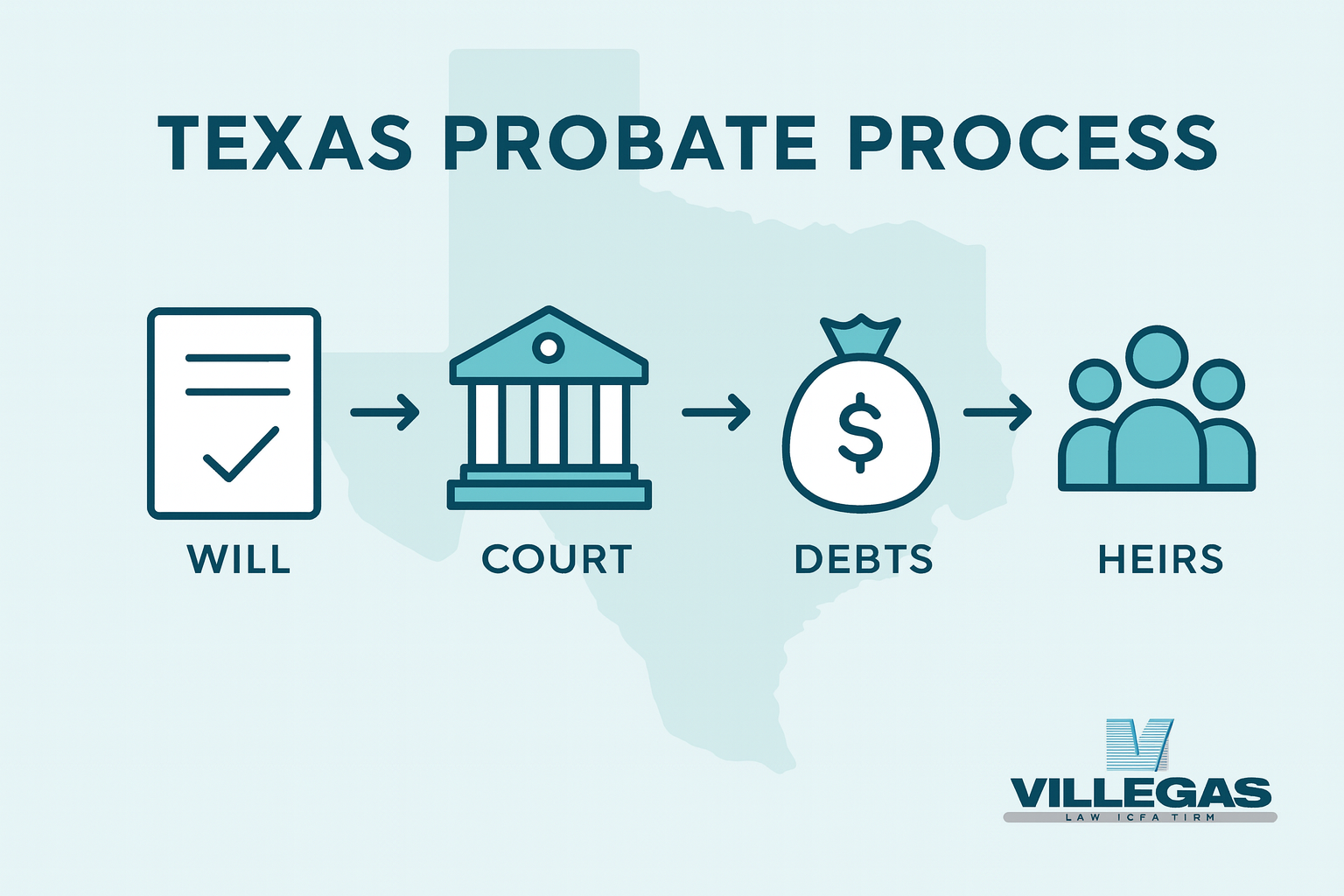
Probate is the court process that validates a will, appoints an executor or administrator, notifies creditors, pays valid debts, and transfers assets to heirs or beneficiaries. In Texas, many estates qualify for independent administration, a streamlined path with minimal court supervision.
Probate is typically required when the decedent owned assets titled solely in their name without a beneficiary. Non‑probate assets—like life insurance with a beneficiary, POD/TOD accounts, and assets in a funded trust—usually bypass probate.
Probate assets include solely‑titled real estate, vehicles, and accounts without beneficiaries. Non‑probate assets include retirement accounts with beneficiaries, payable‑on‑death accounts, life insurance, and properly funded revocable trusts.
Independent administration allows the executor to act with minimal court oversight once appointed. Dependent administration requires ongoing court approvals for actions like sales or distributions.
A local probate lawyer in El Paso helps you choose the right path, meet deadlines, and avoid costly mistakes—especially with notices, inventories, tax choices, and distributions.
Speak with Villegas Law—local, bilingual, and CPA-backed. We guide families through Texas probate.
📍 2211 Trawood Dr, El Paso, TX 79935
Related reading on this topic.
Related reading on this topic.
Related reading on this topic.
Related reading on this topic.
No. Assets with valid beneficiary designations and assets in a properly funded trust typically pass outside probate.
Straightforward independent administrations may complete in 6–9 months; contested matters or dependent administrations can take longer.
Sometimes. Small estate affidavits, muniment of title, and TOD deeds can help in specific scenarios.